CRESCENT PEOPLE: Chef Craig is the Real Deihl
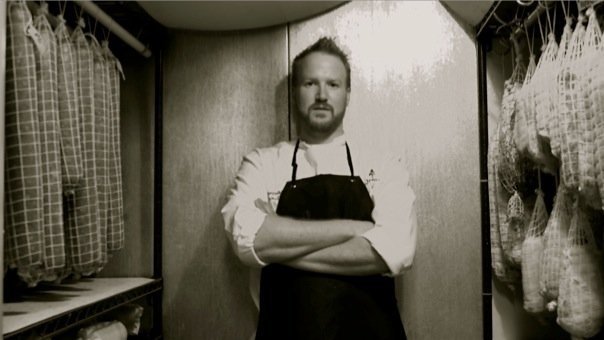
First, do your mouth a favor. If you’re not already, become familiar with the term charcuterie.
Now, as South Carolinians, it’s indisputable that as a state, we love food. We really love it, and we have a lot of food to brag about. The outside world is figuring it out, and on May 7, the James Beard Foundation will announce its 2012 restaurant and chef awards.
Among the five nominees for “Best Chef: Southeast” is Chef Craig Deihl of Cypress in Charleston, and he sat down with CRESCENT before heading to New York for the culinary world’s biggest awards. “I’m enjoying being able to sit down and carry on a conversation that’s not on my cell phone and in a nice comfortable chair, which I can assure you a luxury,” Deihl said we we started talking.
He loves what he does, what he’s able to offer his diners, and he’s a big reason people are tasting South Carolina right now.
—————————
Coming down here originally from Danville, PA, getting that scholarship from Johnson and Wales, how did J&W first find you?
Well, I think a lot of people… first, just to kind of just put a quick clarification, I only had a small partial scholarship. I actually received several partial scholarships, one for a recipe contest that they do every year for high school seniors, one for my junior year when I came in first place in the state of Pennsylvania for FHA Hero competition and was given a renewable $1500 scholarship. The next year I went back and applied for one of their $1500 renewable scholarships and received that but did not place within the state so…I think by the time it was all said and I done, I might have only had about $4500 a year in renewable scholarships, but the way in which I received that was… when I was younger, probably around 12 or 13, I grew up in the kitchen cooking with my Mom, all the time. We always sat down, me, my brother, my mom, my dad always sat down every night as a family to the dinner table. And the conversation was always completely different. “How was your day?” “What did you do today?” My mom…my 8th grade year of school, my mom went back to school for her Registered Nurse degree so the conversations at the dinner table got more and more widely open, which was very comical. And then I started being more and more in the kitchen helping her put dinner together and then usually when my mom worked evenings, I would do dinner. So that was kind of how I kind of got my way into the kitchen. Neither of my parents are professional chefs, they’re not professional cooks, but my mom did all the indoor cooking and the big Christmas get-together, the big Thanksgiving get-together, having family over and my dad did all the outdoor cooking. He had a homemade 50 gallon drum that he converted into a smoker, and for Boy Scouts, he would develop these outdoor plywood picnic tables and plywood cabinets and whatnot, for the pantry and we would go to different locations. It seemed to be we always had the best food. People were like, “Oh, man, you guys have smoked turkey.” You could smoke 2 turkeys in this thing and have enough for 30 boys with baked potatoes and garlic bread and that’s how we ate.
You became very popular, very quickly.
Yeah, so it was… thankful that my dad knew how to be adventurous and cook delicious, tasty food outdoors while my mom knew how to cook delicious, tasty food inside. And then my grandfather owed a 95 acre farm, a truck patch, where me and my brother were the oldest and we would have to pick corn. I’d drive the tractor while he ran the sprayer and planter and all that. Kind of got ingrained what a good food system was. We knew where our food came from. Our other uncle had a butcher shop and it was not uncommon to go down there and actually see some of the animals get put down and then you’re eating them.
You already had a solid background then.
Yeah, I never really worked in a professional kitchen until I went to high school. I went to a technical vocational high school so 3 1/2 hours a day, every day, going to school where I would learn culinary arts, which, I guess when you’re in the 10th grade, that puts you well ahead of everybody that’s going to college.
They’re all still trying to figure out what they want to be when they grow up.
Exactly, so by the time I started college 10 days after graduating high school, I didn’t have a summer break after high school to go out and party and let loose and go crazy. I started college 10 days after graduation at Johnson and Wales for their Advanced Standing program and, by doing that, I graduated with an Associates Degree from Johnson and Wales in 10 months. I was 18 years old. I graduated at 20 with a bachelor’s degree, and I opened Cypress when I was 23.
What made you decide that you were going to stay in Charleston after you finished at Johnson and Wales? Charleston is a long way from Danville, PA.
Yeah, it really is.
Did you leave with the intention of not going back?
My original intention was, and I always told them, “I want to work hard, I want to graduate, and I probably want to work on a cruise ship and travel all over and figure out what global cuisine is. I figured a cruise ship, you don’t ever have to spend money, you’re going to make money and the idea was to work hard, save money and open a restaurant. Well, you start working in a professional kitchen like Magnolias and you slowly start to tell yourself, “You know, I don’t know if I want to own a restaurant because how would you ever get enough money to do something like this?” So, I slowly started to tell myself I never wanted to own a restaurant, I just wanted to operate one and live what I call the American dream. Enjoy what I do, get paid well enough to enjoy what I do, work hard at it, and hopefully, be really good at it.
Well, you proved that because you did 5 years in the kitchen at Magnolias before you opened Cypress.
Yeah, exactly. Opening Cypress in 2001 til now. We’ve been open 11 years.
And you became the Executive Chef after the first six months.
Yeah, I was the Chef du Cuisine, I really was the kind of the driving force behind the restaurant when we opened. As the working chef. I was like, “Hello, I’m scheduling…I’m still doing the same thing I was doing at Magnolias, but once again, here I am. I still don’t have a title that people can relate to.” I’m a guy that works off hard work, determination, and I have a sense of ownership. I have created a partnership within this business that makes me an integral part. That’s what I needed at that time. I needed to hear the Executive Chef title, and that made me want to perform more at an Executive Chef level. And then once you do that, it’s, “I want to elaborate on the food that we do.” We started having more local purveyors come to the door, more local producers of livestock, beef, pork, lamb, chicken, poultry, eggs, what have you and started using those avenues and the cuisine after 5 or 6 years of opening had slowly started to completely transform into what it is today than what it was 11 years ago.
When you got the promotion, what was your vision for Cypress’ kitchen and have you gotten it there yet?
You know, I don’t know if, in the real world, if I’ll ever get the Cypress kitchen where it needs to be because, if you’ve ever been in the kitchen at Cypress, it’s bigger than most hotel kitchens that are running banquets and…I mean, it’s a monstrous kitchen and it’s on two floors. And a lot of what we’re doing now is basically to utilize all of the space which we have and always have something in there whether it’s a couple hours a day or at least once a week going on. At least, we’re using all of the space that, way back eleven years ago, we were not.
Your charcuterie program. That’s something that seems to be really prevalent through the menu. What does that mean to you personally, and how do you think it has added to your own inventiveness as a chef?
Well…
Because if you’re not throwing anything away, you’ve got to figure out ways to use what’s there.
Yeah, you’re absolutely right and our quest to be able to get better quality product on the dinner table. And that’s when we bought our band saw and, when we ought the band saw, we knew that by us working hard at the product, we would buy a better quality product coming in the door. So instead of just buying standard choice beef, we were able to buy…originally it was higher grade certified Angus beef that meant more of a higher end prime without paying for prime beef, which we have kind of stuck with now over the years. We also were buying local beef and were able to procure local pigs from various assorted farmers all in heritage breeds whether it is Camworths, Berkshires, Ginnings, Red Waddles, Mulefoots. I cannot begin to describe how many different breeds of pigs I have upstairs curing right now, but they are old, fatty lines of pig.
Which is really what people want to see right now.
Yeah and for good reasons and, also at the same time, I’m not doing…I’m really not doing this for sake of doing it. My quest is always, I want a better quality of product to go out. And I think my commitment to the product that comes in the door is a testament to what we’re able to achieve by putting in our curing room or putting on our charcuterie plate or the bits and pieces that go into making a better sausage or being a better butcher, for that matter. Hard work and determination has accredited that entire charcuterie program to be what it is.
- Follow Chef Deihl on Twitter at @cdeihl.
- Visit his personal website at therealdeihlchef.com.
- Visit Cypress online HERE.
Stay tuned for Part 2.