CRESCENT Things: James Beard Award Winner Ted Lee Talks About SC’s Invasion of NYC (Part 2)
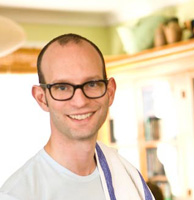
EDITORIAL UPDATE: On the Monday, October 10, 2011 edition of his MSNBC program “Morning Joe,” host Joe Scarborough asked, “What is it about the South? You can’t find a musical form in America, American pop culture, that did not start in the Deep South. Some of the greatest literature, some of, well, THE greatest cooking… What is it about Southern culture that spawned such creativity?” It’s funny you should ask, Joe. Thanks to James Beard Award Winner Ted Lee, we help answer those questions right here.
While we talked, Ted noted that it really hasn’t been so long ago that you wouldn’t find Southern food in New York, “Not any Southern food that you would write home about,” he added. Thanks to adventurous chefs and a lot of Southern culinary intuition, that’s rapidly changing.
THE NATIONWIDE EXPLOSION OF SOUTHERN COOKING
I’ll definitely give the South credit where credit is due, but nationwide, I think, just the food culture has been focusing, I mean as much as there is that celebrity chef crap that’s going on, it’s becoming a more ingredient-focused nation.
People are asking, “Where does this come from? Where is this grown?” As soon as you do that with the South, it becomes the richest place on earth. It doesn’t take long. If you’re completely ignorant of the South and you’re a foodie, you’ve done the San Francisco thing, you’ve spent time in Napa Valley, you’ve done the whole fresh, seasonal thing and then you go to a place like Charleston and it’s like…there is so much there. My God, crab, shrimp, oysters, tomatoes. All the vegetables, they’re sourcing everything locally and you learn about sorghum and you say “That’s stuff incredible.” You taste it and you say, “I’ve lived in San Francisco all my life and we have everything and we don’t have this?”
Then you taste the different varieties of sorghum, and then you get in country ham.
I don’t think there is any other cuisine in America that rewards inquiry as much as Southern cooking. It’s getting over the sort of hangover of the mid-century which happened everywhere in the US. It didn’t just happen in the South, it happened everywhere. Everything became heavy and sort of casserole-focused and that was an economic thing more than anything.
But the other great thing was so many things endured before industrialization, the traditions, the cane grinding. Like grinding sorghum cane or sugar cane. That’s done is the South still. A family has a cane farm, they have a cane grinding party. That’s something you don’t see everywhere.
I also think that a number of reasons, food and traditions sort of like festivals, the Blessing of the (shrimp) Fleet. Food and life are attached in the South in a way that they’re not in 21st century America. You stroll down to the end of the street, there’s a festival, it’s called Smorgasburg, it’s a food truck festival, it happens every Saturday. That’s a food truck festival. It’s not really about life. The blessing of the shrimp fleet is about life. It’s about the life of the shrimpers and everyone celebrates the start of the shrimp season. It’s a one-time deal and everyone looks forward to it every year. It’s like there’s entertainment, there’s the blessing. It’s a date on the calendar and that’s rare.
SOUTHERN CUISINE REWARDS INVENTIVENESS
So I just think that fundamentally, Southern cuisine rewards inquiry, especially as it has been lampooned for the past 30 years. Somebody tries it though, and says, “Somebody has been telling me the wrong thing. I’m so excited I can pursue this.” Matt and I have seen so many people get excited. And sometimes you’ll have a chef… it’s interesting to see how chefs who are not Southern, what they do with Southern ingredients once they discover them because they go crazier than we do.
David Chang. He was like the first guy in New York who went crazy for country ham. He went crazy for country ham. Southerners know their country ham producers because (to them) that’s the best ham. He (Chang) comes at it from a different perspective, which is less, “I know the best one, I am loyal to this producer.” He’s coming at it from “Oh my God, this is amazing. This one is different, and that’s amazing, too.” He was the first guy to do a tasting plate where you had a Tennessee ham, a Virginia ham, a North Carolina Ham, and a Kentucky ham on the same plate. That’s not really a Southern idea.
I think a lot of restaurants are starting to do it themselves but it’s that thing where you can learn about your own food by someone who is taking it to other places. So it’s interesting to see that perspective, a guy who would put four different country hams on a plate and be like, “See how awesome they are? See how each one has a different flavor?” That’s cool. It’s an interesting sort of …David grew up in Richmond, so he is a Southerner, but you know what I’m saying?
Stay Tuned for Part 3 Next Week. Read Part 1 HERE.